Supportive Services Team’s “Dementia Support Corner”
For friends and family who have not been directly impacted by dementia before, interacting with a person with memory loss can feel overwhelming. As a result, many caregivers experience their social circle shrinking over time. In this blog, Alisa Isumi (Supportive Services Manager at Alzheimer’s San Diego) provides suggestions on how you can help guide friends and family to continue to be a social support for you and how to connect with a loved one with dementia.
How to Help Friends and Family Connect with Your Loved One
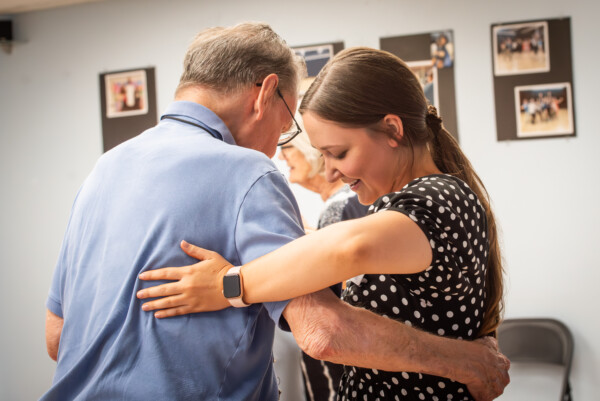
Continuing to engage in activities and social connection is important for caregivers and people living with dementia. If you feel your social circle pulling away, it might be because they are unsure of how to interact with people living with dementia. If you think your support network could benefit from some guidance, Alisa has some suggestions:
- Create a cheat sheet with general guidelines/reminders: A simple “cheat sheet” can ease uncertainty and help your friends and family interact with your loved one living with dementia. Text it, email it, or keep your “cheat sheet” on your fridge for house guests to see. Some bullet points that Alisa thinks would be helpful to add to your “cheat sheet” for your friends and family include:
- Repetition will likely be required, and that’s ok!
- Enjoying quality time together is more important than being right. Instead, try joining their reality.
- Focus on connecting and not correcting.
- If the person is struggling with activities they’ve always enjoyed, be open to trying new things.
- Keep friends and family up-to-date on your loved one’s unique needs: Every person’s dementia symptoms are different, and Alisa says it is helpful to make your social circle aware of where your person living with dementia is at with the disease and things they might need help with. For example, if you are going out to lunch and your loved one living with dementia has recently started having trouble selecting from a menu, let your friend or family member know that they might need help picking something out on the menu. Keeping your social circle updated before socializing can help lessen the anxiety for both your friend/family and your person living with dementia.
- Offer activity options to your social circle: Your friends and family might not know what activities your loved one enjoys as their dementia progresses. Alisa suggests offering a range of activities that your loved one would enjoy when setting up a time to socialize. These activities can be as hands-on as taking your loved one out to lunch or to a social activity at Alzheimer’s San Diego, or as passive as writing and mailing cards back and forth. To help your social circle facilitate conversations with your loved one, Alisa suggests picking up free “conversation cards” at Alzheimer’s San Diego that serve as dementia-friendly conversation starters.
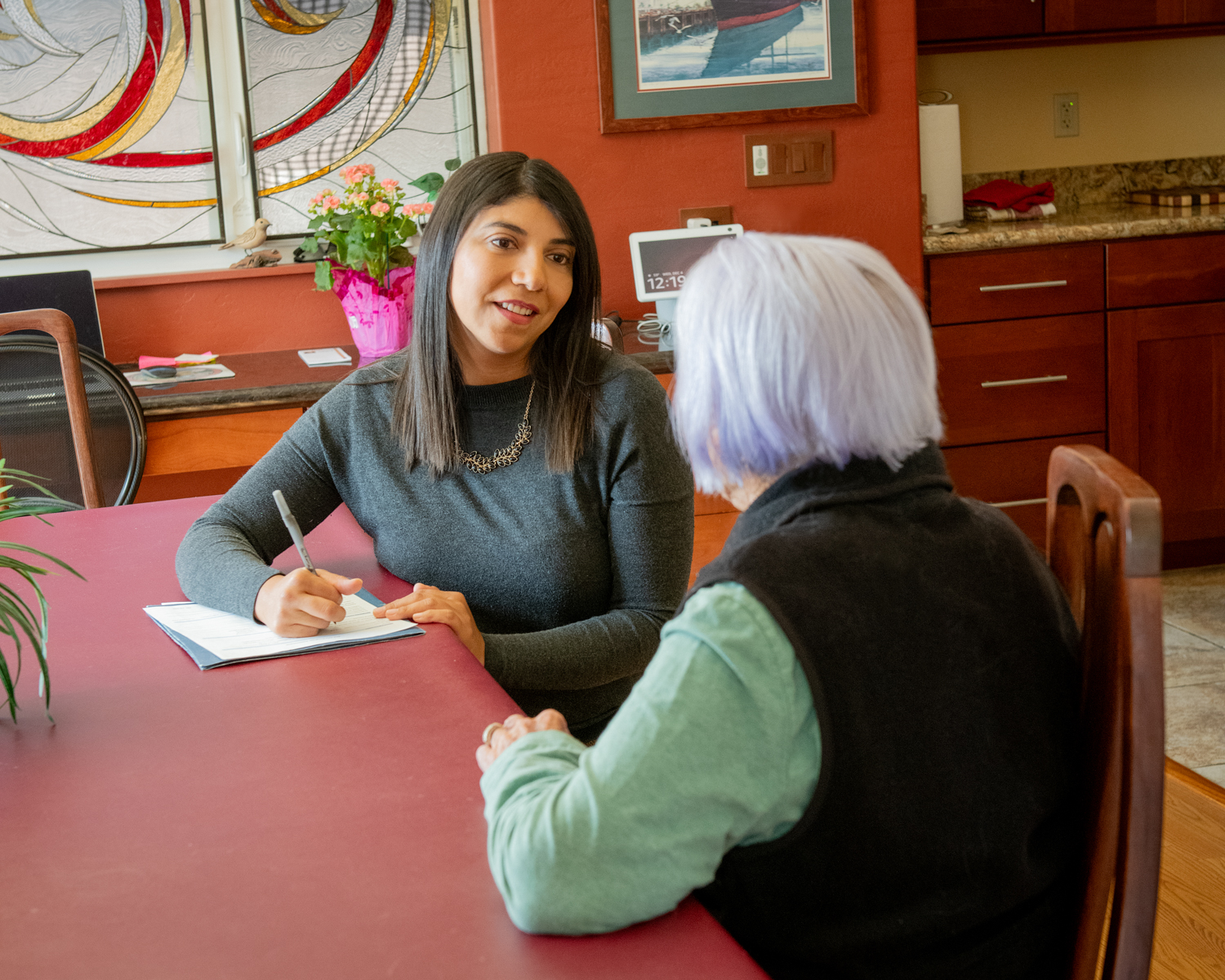
Remember, although guidance is helpful, it isn’t your job to be an educator. “You’ve got enough on your plate already,” says Alisa, “you don’t need to take on being a dementia educator.” Instead, Alisa suggests directing them to our website for additional knowledge. Alzheimer’s San Diego has a comprehensive video library of education classes on topics like Communication Skills, Dementia 101, and How to Talk About Memory Loss. Your friends and family can also call our office at 858.492.4400 and get one-on-one guidance with a Dementia Care Coach.
Join Alzheimer’s San Diego’s Dementia Community
Alzheimer’s San Diego offers various programs to help you and your loved one living with dementia socialize and connect with others in the dementia community. Alisa recommends checking out:
- Social Activities
- Support Groups
- PATHWAYS
- ALZ Companions
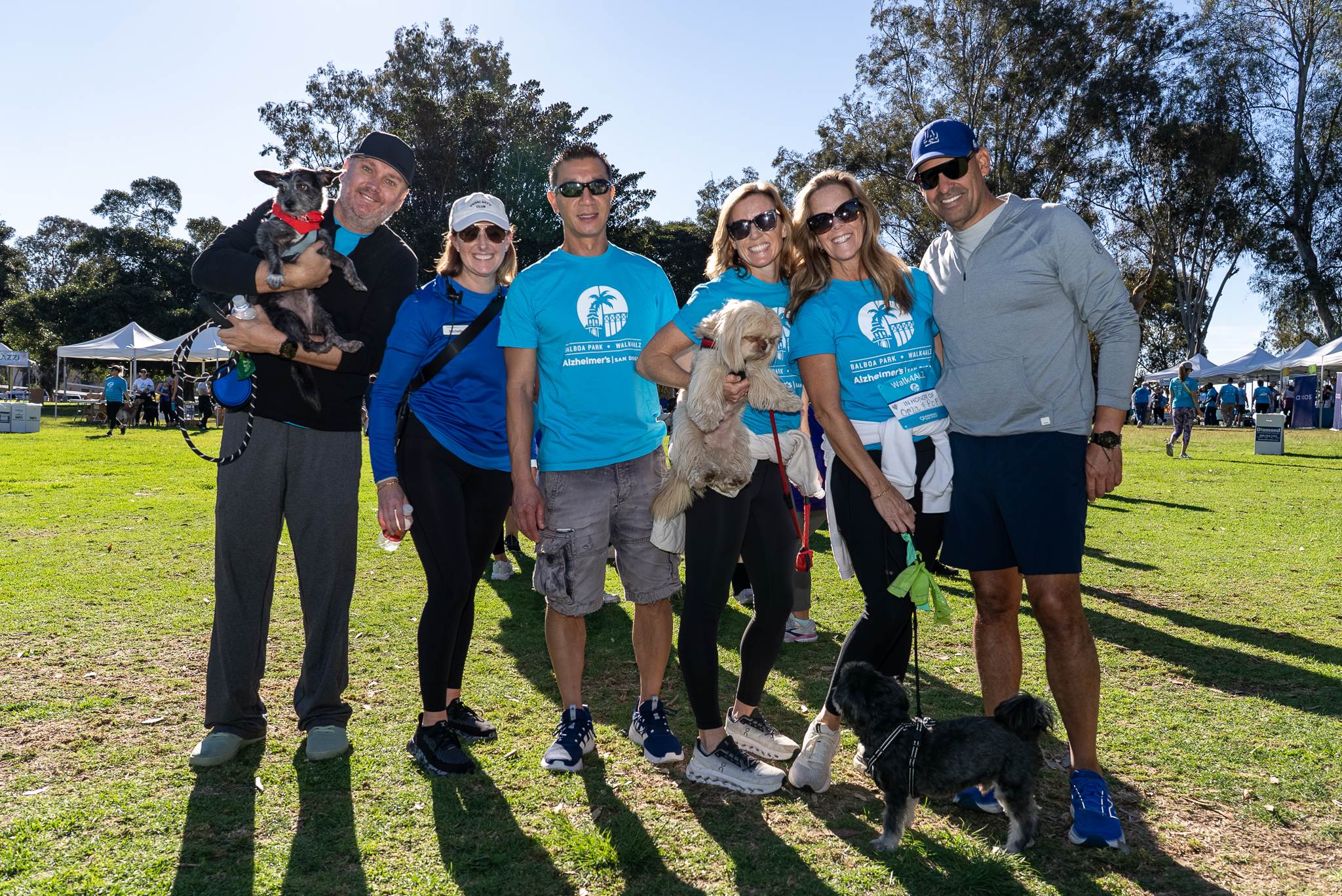
- And our annual community fundraising event, Walk4ALZ
As one caregiver shared after going to Alzheimer’s San Diego’s Walk4ALZ event in 2025, “When I see everyone at Walk4ALZ, it’s proof that no one has to be in this alone. Remember that this community can offer you strength and resilience when you feel like you don’t have any left.”
You don’t have to navigate caregiving alone, we are here to help you:
Whether it is helping your friends and family, finding resources in San Diego County for dementia, or caring for your loved one, you do not have to navigate caregiving for a person living with dementia alone. Our team of compassionate Dementia Care Coaches are available to offer you free personalized guidance for your unique situation and needs. Call 858.492.4400 or fill out this form to get help today.
Our “Dementia Support Corner” series is an opportunity for our Supportive Services team to provide insight that can help people impacted by dementia.
By Heidi Emmenegger
RECOMMENDED: Processing Role Reversal for Adult Children Caregivers
Posted on July 16th, 2026